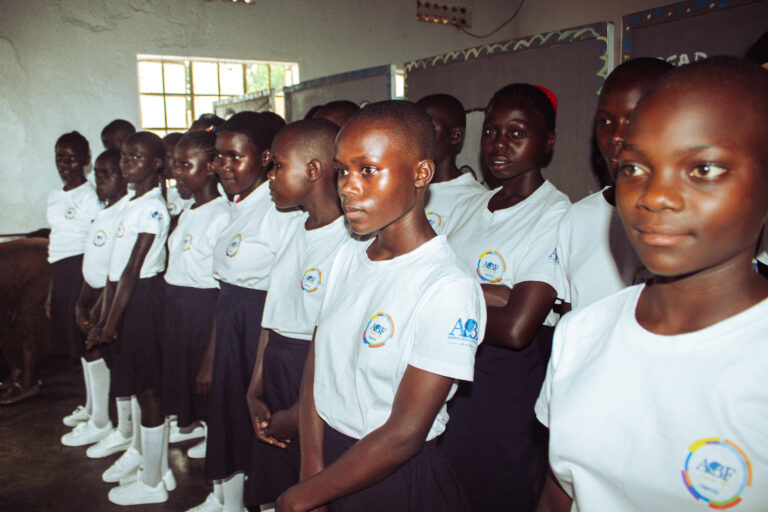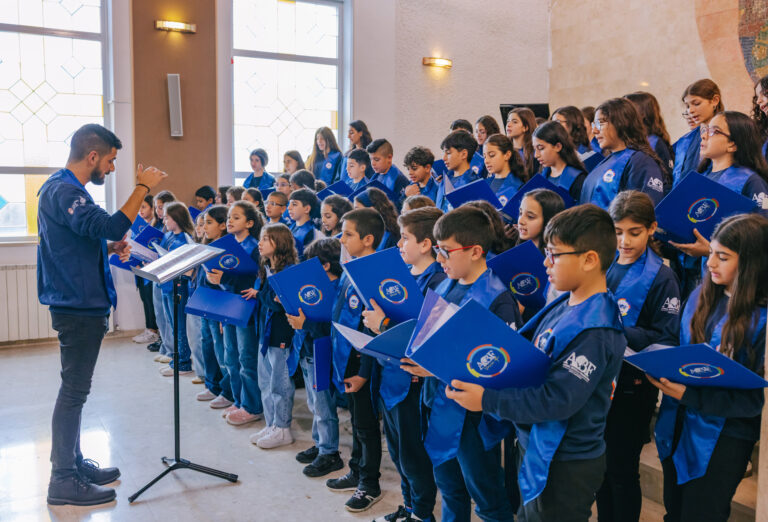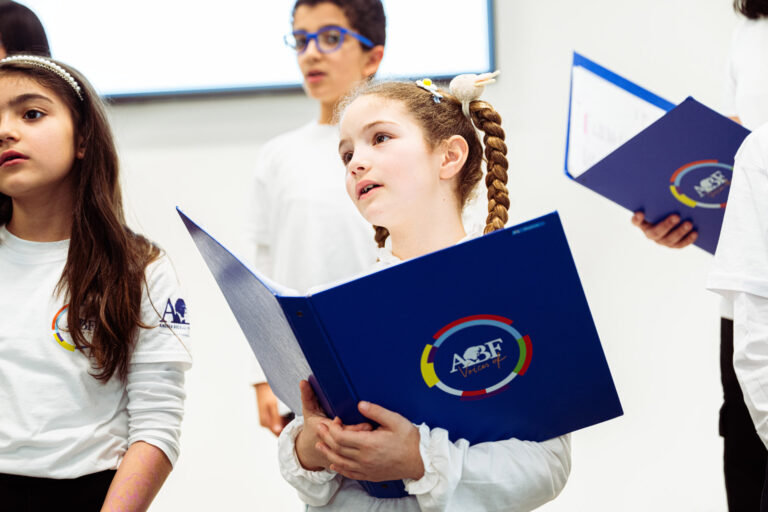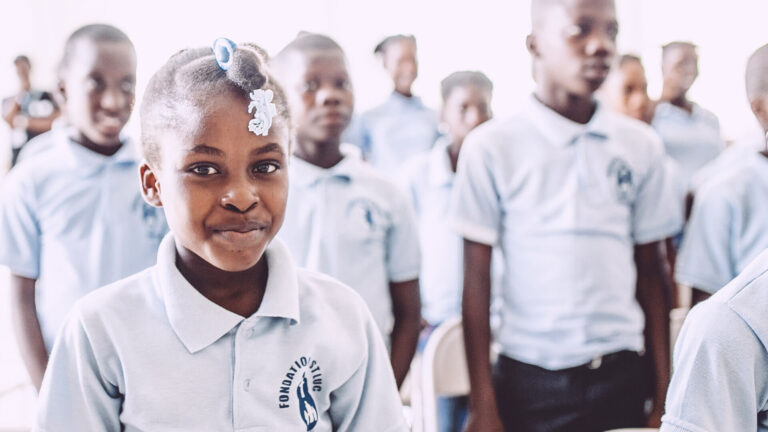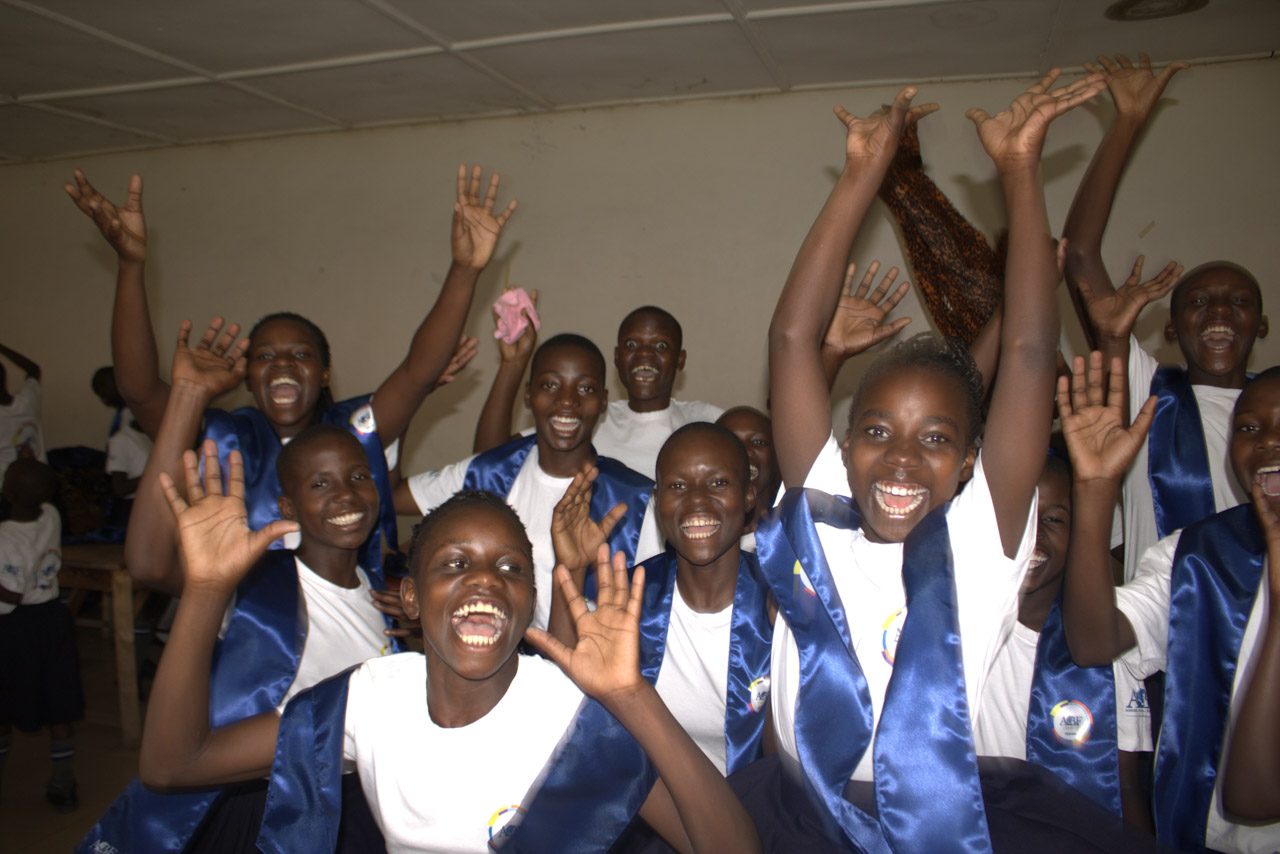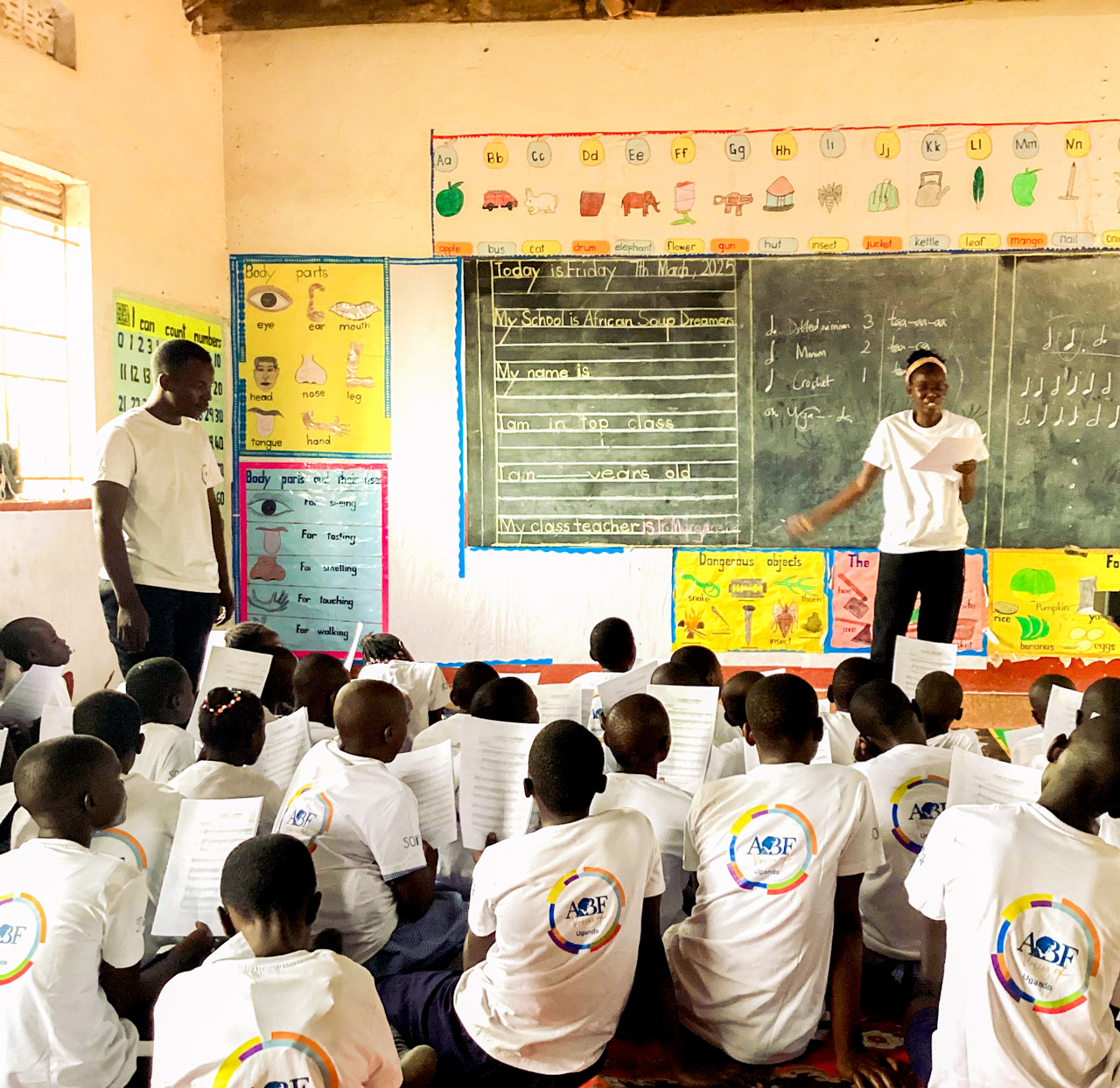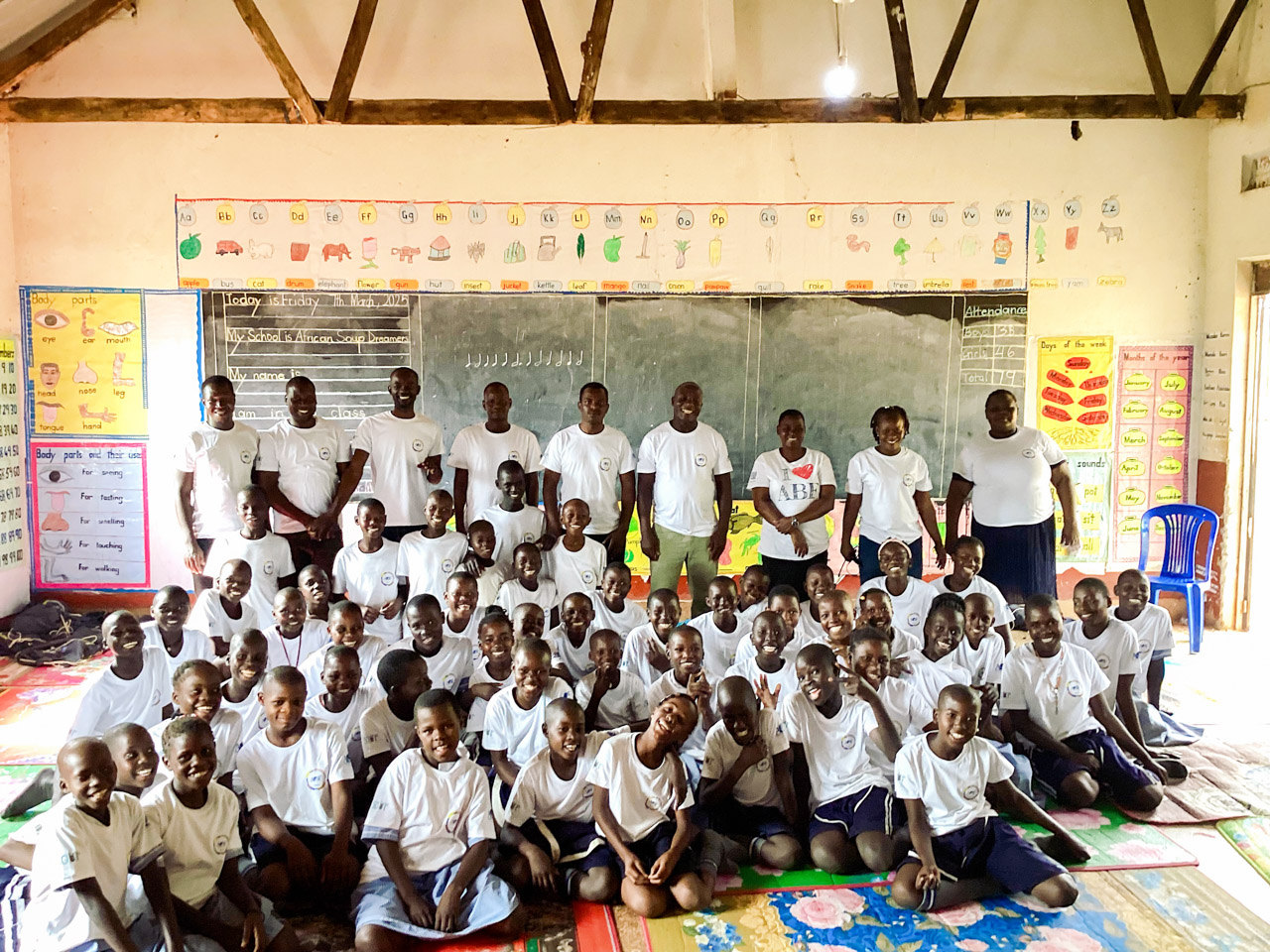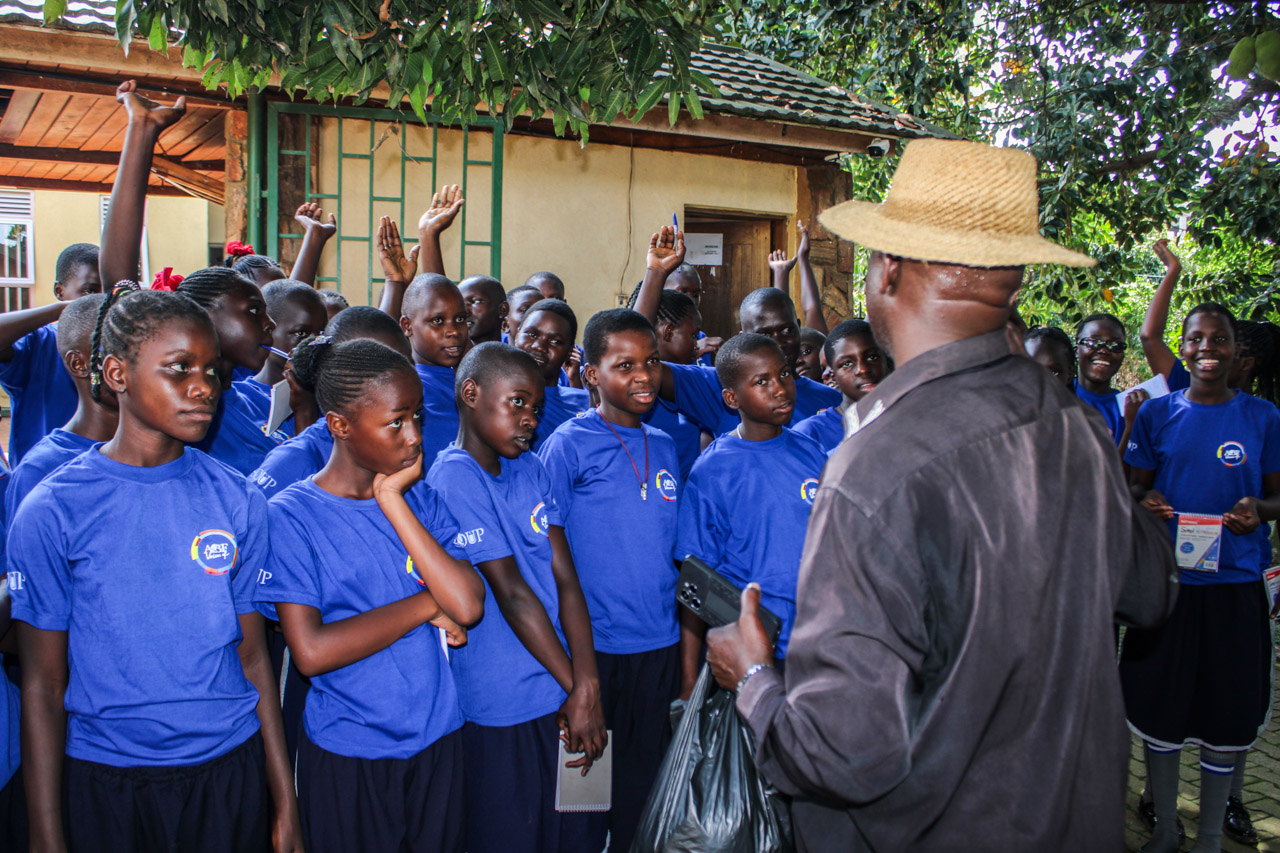

Through the choir, the project strengthens social-emotional and interpersonal skills and fosters a sense of belonging, contributing to the development of human and community capital.
ABF operates in Uganda because the country recognizes art, music, and theater as educational and social drivers, and incorporates them into its cultural and youth development goals. In the village of Nabikabala (located in the Namutumba district, not far from the Kenyan border), where access to educational and cultural opportunities is limited, ABF Voices of Uganda fits seamlessly into this framework, complementing local educational offerings and supporting the growth of young people through a universal, inclusive language that is recognized at the institutional level.
Context – The Need, the Problem
In Uganda, especially in rural and outlying areas, access to educational and cultural opportunities is often limited by socioeconomic vulnerabilities that affect the quality of children’s and adolescents’ development. In the village of Nabikabala, where ABF operates through ABF Voices of Uganda in collaboration with African Soup Uganda, families face precarious conditions that can undermine the continuity and richness of young people’s educational experiences. In these contexts, school is an essential institution but cannot always, on its own, guarantee the space and time needed for the holistic development of the individual—not only cognitive skills, but also emotional, relational, and creative resources. The lack of structured environments where children can experience a sense of belonging, be heard, and cooperate can lead to isolation, reduced motivation, and fewer opportunities to “put their talents to the test.” This results in a broad educational need: to build safe, consistent environments that support children as they grow, strengthen their trust in themselves and others, and offer concrete opportunities for self-expression and participation.
The issue concerns not only the availability of education but also the ability to access programs that support psychosocial well-being and the skills needed to navigate complexity and change. ABF Voices of was created, in fact, to develop cross-curricular and socio-emotional skills through inclusive educational environments, particularly in communities that, due to economic and social vulnerability, would otherwise risk being deprived of such opportunities. In contexts such as Nabikabala, children and adolescents may have fewer opportunities to engage in extracurricular activities that help develop skills such as emotional regulation, communication, collaboration, perseverance, and self-awareness—skills that influence their ability to learn, stay motivated, and build positive relationships. Furthermore, when “community-based” educational spaces are lacking, growth risks becoming fragmented: there are few opportunities to be part of a stable group, to share goals, or to feel valued. Therefore, an educational experience is needed that is at once accessible, ongoing, and capable of fostering connections and strengthening the educational community surrounding young people.
In this context, the performing arts (art, music, acting/theater) are particularly effective tools because they offer an immediate, inclusive, and communal language: they allow for learning “by doing,” building relationships, and gradually developing self-confidence. Choral practice, in particular, has a distinctive strength: it builds group cohesion and harmony through simple rules (listening, keeping time, respecting others), transforming participation into competence. ABF Voices of is founded precisely on this dimension: the choir as the “tool par excellence” for building harmony, reinforced by educational practices focused on social-emotional and relational skills. In a rural setting, the choir also becomes a bastion of positive social interaction: it creates routines, shared responsibility, and a sense of belonging, offering young people a concrete and enriching community experience.
The need, therefore, is twofold: on the one hand, to support young people’s development through educational programs that strengthen personal and social skills; on the other, to create stable, inclusive, and ongoing community spaces that foster well-being, motivation, and confidence in the future. ABF implements Voices of Uganda precisely with this in mind, launching a choir composed of young participants and integrating it into the local school and community context, in collaboration with a partner deeply rooted in the area. In the absence of structured cultural opportunities, there is a risk that talents will remain unexpressed and that socio-emotional growth will be left to chance, affecting young people’s ability to cope with stress, conflicts, and change. An initiative based on choral practice addresses this problem because it is scalable, inclusive, and highly relationship-oriented: it fosters collaboration and active listening, boosts self-esteem, and builds bonds. In the long term, strengthening young people’s skills and sense of belonging also strengthens the community: it builds human and relational capital that contributes to local resilience and the ability to envision richer, more autonomous life paths.
ABF’s Intervention
ABF is launching an educational program in Uganda based on music and choral singing, designed to develop the social-emotional and interpersonal skills of children and adolescents. The choir serves as a structured space for learning, listening, and cooperation, where participants can build self-esteem, discipline, and a sense of belonging.
The project is carried out in collaboration with the local partner African Soup Uganda and is integrated into the school in the village of Nabikabala, strengthening its role as an educational and community hub. The choral activities fit seamlessly into the local context, highlighting music as an accessible and inclusive educational language.
Through an ongoing initiative deeply rooted in the local community, ABF helps create sustainable educational opportunities, supporting the growth of young people and strengthening the community’s human and relational capital. Music thus becomes a concrete tool for promoting resilience, participation, and shared development.
Why
- Educational poverty and social exclusion
- Lack of safe spaces for children and youth
- High risk of becoming involved in cycles of violence
- Need for psychosocial support and educational continuity
The Project
A) Partner
African SOUP – Uganda is a local organization that has been committed for years to providing educational and community support to children and families in vulnerable rural settings. The partner operates directly in the village of Nabikabala, with in-depth knowledge of the area, the schools, and the community’s educational and social needs, and serves as a stable point of reference for youth development.
B) Actions
- Launching and managing a school youth choir at the African Soup School in Nabikabala, with structured weekly meetings
- Use of choral practice as an educational tool to strengthen listening skills, cooperation, discipline, and active participation
- Integration of educational activities focused on social-emotional skills (self-esteem, emotion management, teamwork) into rehearsals
- Progressive involvement of teachers, families, and the local community, strengthening the school’s role as an educational and community hub
C) Objectives
- To strengthen the social-emotional and interpersonal skills of children and adolescents through music and group work
- Support educational continuity and motivation in a rural setting with limited access to cultural opportunities
- Promote music as a recognized educational language consistent with the Ugandan cultural and institutional context
- Contribute to the development of human and community capital by fostering participation, a sense of belonging, and shared responsibility
D) Impact on the Community
The project strengthens the community’s human, social, and educational capital by addressing the factors that most significantly impact the growth of children and adolescents in vulnerable rural settings. Through choral practice, participants develop fundamental social-emotional skills (such as self-awareness, emotion regulation, collaboration, and a sense of responsibility) that promote individual well-being and improve the quality of family and community relationships. As part of ABF’s broader commitment in Uganda to education and the strengthening of school services, ABF Voices of Uganda helps create an environment conducive to continuous and meaningful educational growth. The project supports families by offering young people a safe, structured, and motivating space, and strengthens the community as a whole by promoting participation, a sense of belonging, and positive models of youth leadership. In a context marked by socioeconomic fragility, the choir thus becomes not only an educational experience but also a bastion of resilience, trust, and shared development.
E) Project Phases
- 2024: Launch of the project and establishment of the youth choir at the African Soup School in Nabikabala, with the first educational and musical activities
- 2024-2025: Consolidation of the choir program, strengthening of social-emotional skills, and gradual involvement of the local educational community
- 2026: Highlighting educational achievements and preparing for public events to showcase and recognize the program’s progress, as well as participation in the Global Gathering 2026