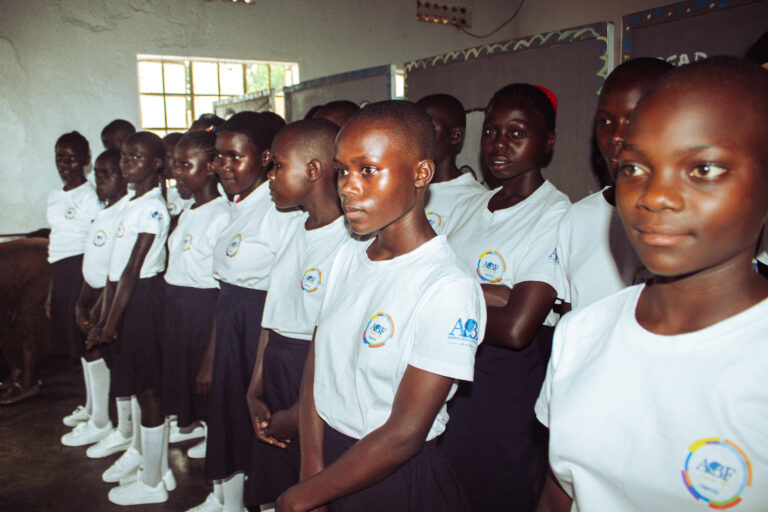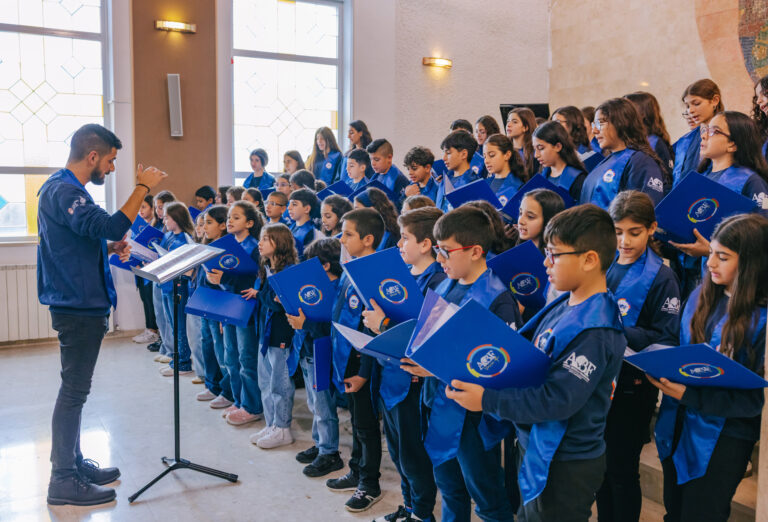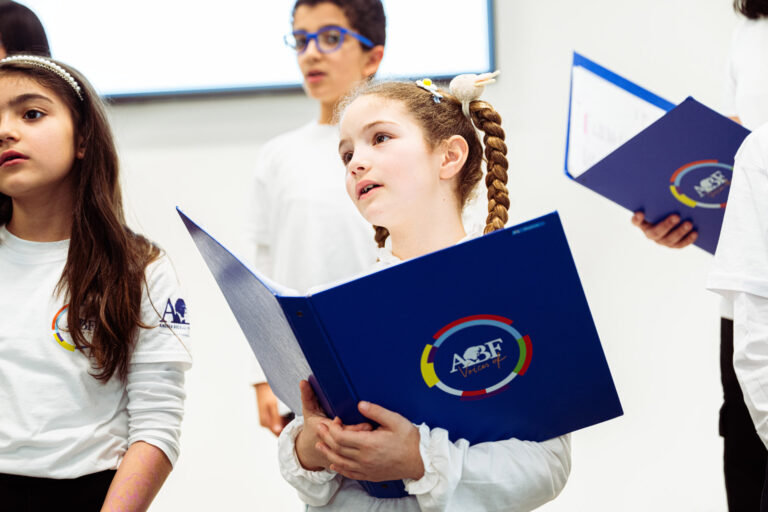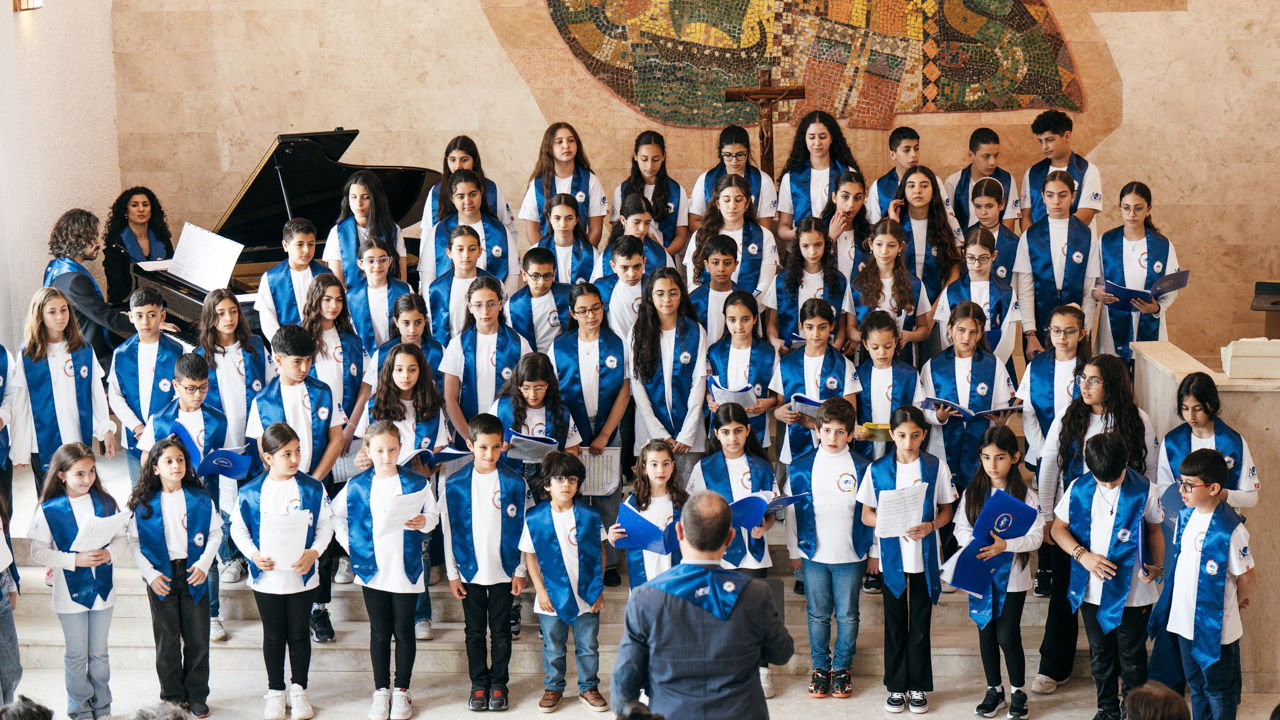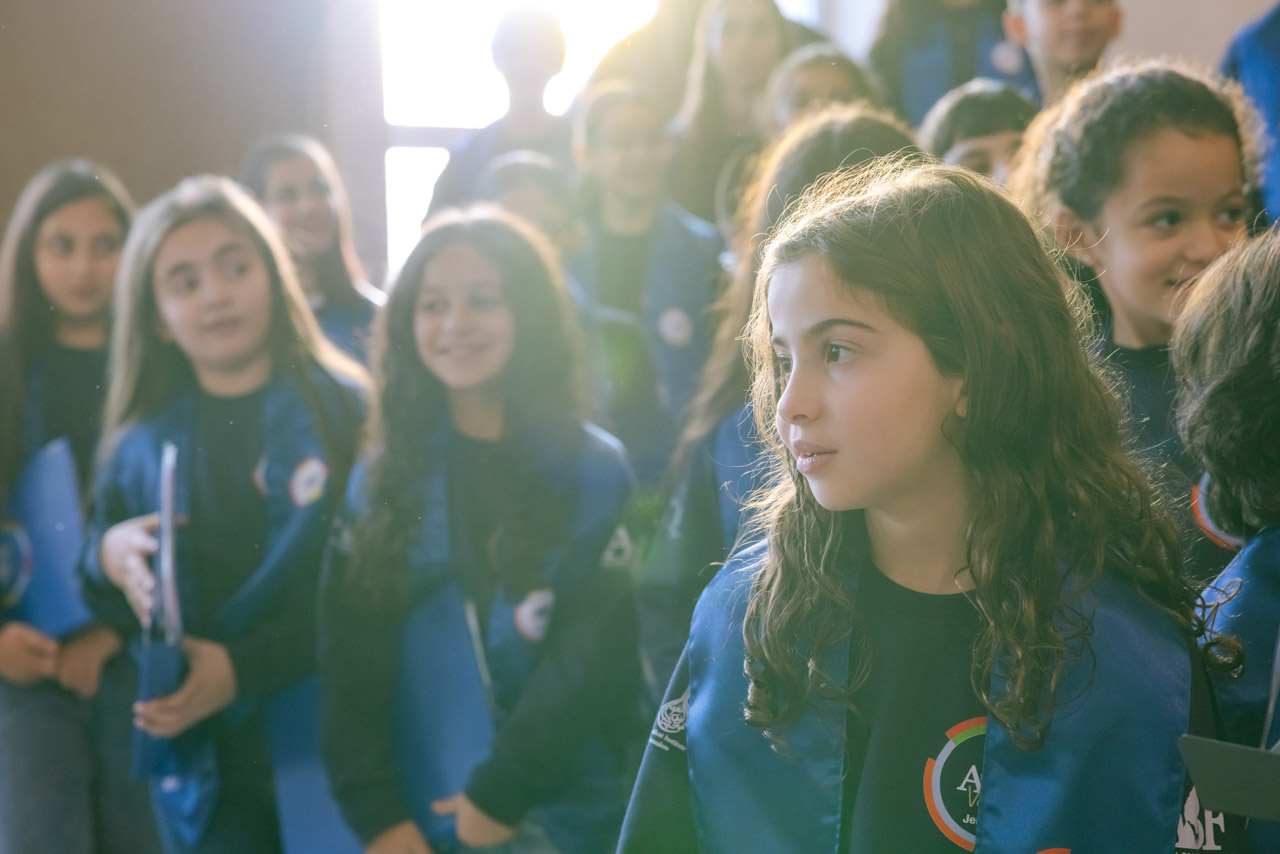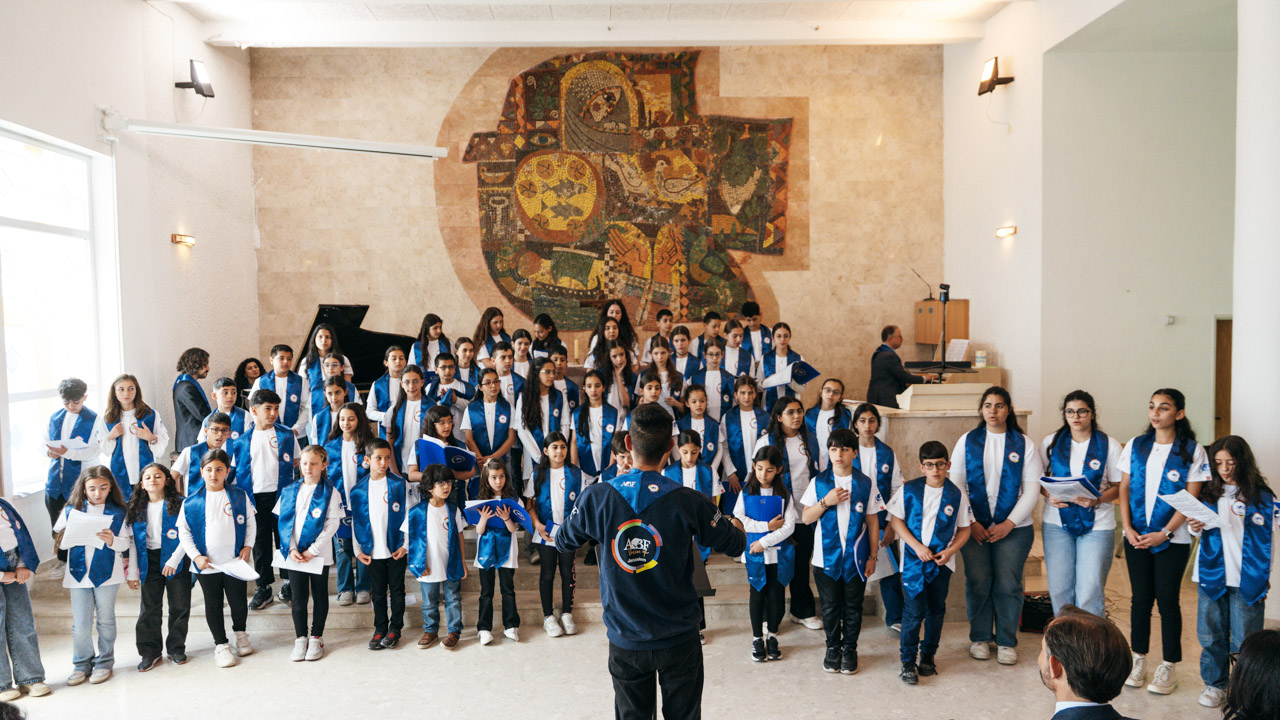

The project involves children and young people from diverse cultural and religious backgrounds, offering them a shared educational experience based on listening, collaboration, and mutual respect. Through the choir, music becomes a common language capable of bridging differences and building positive relationships. ABF Voices of Jerusalem serves as an inclusive educational space focused on personal growth and peaceful coexistence.
Jerusalem is a complex environment, marked by political instability, social fragmentation, and a growing shortage of truly inclusive educational and cultural spaces for young people. In this context, children and adolescents have few opportunities to meet in neutral, safe, and ongoing settings that foster dialogue and cooperation. The project was created to address this need, offering an educational space where young people can grow together, develop interpersonal skills, and experience concrete forms of coexistence. Music and the choir thus become key tools for creating connections, strengthening a sense of belonging, and promoting a culture of encounter from childhood onward.
Context – The Need, the Problem
ABF Voices of Jerusalem operates in an area characterized by significant social and territorial complexity, involving children and adolescents from East Jerusalem and Bethlehem—two geographically close contexts marked by different dynamics, vulnerabilities, and opportunities. In both contexts, access to inclusive, ongoing, and safe educational and cultural spaces is limited, especially for the youngest children. This lack affects their psycho-emotional well-being, the quality of their relationships, and their ability to develop the fundamental skills needed to navigate a complex environment. The educational need, therefore, centers on creating environments that offer stability, recognition, and opportunities for growth, beyond formal education.
In East Jerusalem, young people often grow up in a context marked by social fragmentation and a sharp separation of educational and cultural spaces, with few opportunities to meet in neutral, shared environments. In Bethlehem, on the other hand, the challenges stem from a limited availability of structured and ongoing extracurricular opportunities. In both cases, the lack of shared educational spaces limits the development of social-emotional skills such as communication, cooperation, and emotion regulation, and makes it more difficult to build a positive sense of belonging. The problem is not only access to education, but the absence of environments capable of supporting balanced and relational growth.
In a context where territorial, cultural, and social differences are strongly felt, it becomes essential to create shared educational experiences capable of bringing together young people from different backgrounds without erasing their unique characteristics. Music and choral practice represent an effective educational response because they use a universal, accessible, and inclusive language. The choir becomes a tangible space where connection occurs through mutual listening, collaboration, and respect for shared rules, transforming diversity into an educational resource. In this sense, choral practice allows participants to experience dialogue on a daily basis as a lived reality—not merely as an abstract principle.
The need, therefore, is to offer young people in East Jerusalem and Bethlehem a stable and accessible educational experience capable of overcoming social and territorial barriers and strengthening skills useful for personal and community life. Meeting in Area C, in a location near Bethlehem, makes it possible to create a common, functional, and shared educational space where participants can grow together within a continuous program. A structured choral project addresses this challenge because it builds a concrete educational community over time, fostering a sense of belonging, trust, and the development of positive relationships. In a complex context, the choir thus becomes an educational anchor that contributes to social cohesion and the building of a shared future.
ABF’s Intervention
ABF intervenes by creating a single educational choir, composed of children and youth from East Jerusalem and Bethlehem, who participate together in a shared journey within the ABF Voices of program. Music and choral practice become educational tools for strengthening social-emotional, relational, and collaborative skills, addressing the specific needs of young people living in different yet interconnected contexts.
Rehearsals and educational activities take place in Area C, near Bethlehem, a location chosen for its accessibility and suitability for the participation of young people from both backgrounds. In collaboration with the Magnificat Institute, a local educational partner, the choir provides a structured and ongoing environment where listening, discipline, and cooperation are daily educational practices.
Through a stable and integrated initiative, ABF helps build a shared educational space that values the diverse experiences of East Jerusalem and Bethlehem, promoting a concrete experience of coexistence and belonging. Music thus becomes an educational tool capable of strengthening the participants’ human and social capital, supporting families and communities, and fostering positive models of relationships and dialogue.
Why
- A limited supply of alternative educational activities and social fragmentation, which restrict children’s and young people’s access to inclusive and continuous educational experiences
- A lack of safe, neutral, and shared educational spaces where young people from diverse backgrounds can meet and grow together
- Limited opportunities for peer interaction and dialogue, with a consequent risk of isolation and social withdrawal
- The need for psychosocial support and the development of social-emotional skills, which are essential for navigating a complex and unstable environment
- The need for educational continuity and a positive sense of belonging, through a structured experience that strengthens trust, cooperation, and a sense of community
The Project
A) Partner
The Magnificat Institute of Jerusalem, founded and managed by the Custody of the Holy Land, is a music school with a long and recognized educational tradition in the heart of Jerusalem’s Old City. The Institute is a unique place for artistic and human formation, where children and young people from diverse cultural and religious backgrounds study and grow together through music, promoting dialogue and coexistence on a daily basis.
The Custody of the Holy Land, which has been present for centuries in the territories of Jerusalem and Bethlehem, is an institution deeply rooted in the local context, committed to the preservation of cultural heritage and the development of educational and social initiatives serving the communities. Through the Magnificat Institute, the Custody supports educational programs that use music as a tool for connection, inclusion, and personal growth.
The partnership with the Magnificat Institute and the Custody of the Holy Land provides ABF Voices of Jerusalem with a solid educational foundation, in-depth knowledge of the region, and a pedagogical approach attuned to the cultural and social specificities of young people from East Jerusalem and Bethlehem.
B) Actions
- Launch and management of a single youth choir composed of children and teenagers from East Jerusalem and Bethlehem, with structured weekly rehearsals
- Integration of educational activities focused on social-emotional skills (emotion management, communication, teamwork, respect for differences) into the assessments
- Implementation of psychosocial support initiatives for participants, focusing on emotional well-being, providing spaces for listening, and offering educational guidance in a complex context
- Progressive involvement of families, educators, and local partners, strengthening the choir as a stable educational space and a community hub for young people
C) Objectives
- To offer children and young people in East Jerusalem and Bethlehem a shared educational experience based on interaction and collaboration
- To promote dialogue, coexistence, and emotional well-being through choral practice and psychosocial support
- To create a safe and ongoing educational space that fosters a sense of belonging, trust, and positive relationships
- To highlight music as a common language capable of harmonizing differences and supporting personal growth
D) Impact on the Community
The impact of ABF Voices of Jerusalem on the community is built over time through the creation of a shared and recognized educational space that involves not only children and youth from East Jerusalem and Bethlehem but also their families. Parents are progressively involved in the educational processes and project activities, becoming active participants in a journey that strengthens trust, continuity, and a sense of security among the participants. This involvement helps consolidate the choir as a stable point of reference, capable of influencing the emotional well-being of young people and the quality of family relationships.
Over time, the project has gained recognition and legitimacy within the community, which acknowledges its educational and relational value. The fact that children and youth regularly gather in Area C for rehearsals and educational activities has transformed the choir into a concrete, predictable, and reliable educational presence in a fragmented context. The impact is measured not only in terms of individual journeys but also in the project’s ability to foster widespread trust, strengthen informal educational networks, and promote a culture of connection that arises from lived experiences—experiences that are shared and supported by the adults in their lives.
E) Project Phases
- 2023: Launch of the project through a phase of dialogue, listening, and co-planning with the local partner (Magnificat Institute and the Custody of the Holy Land); definition of the educational model and identification of a shared space for activities
- 2023–2025: Formation of a single choir composed of children and youth from East Jerusalem and Bethlehem, followed by the implementation of the contingency plan, with rehearsals and educational activities beginning in separate groups in Jerusalem and Bethlehem, and one joint rehearsal in Area C once a month;
- 2025: Return to weekly joint rehearsals and consolidation of the choral program; integration of educational and psychosocial support activities; strengthening of continuity and the gradual involvement of families
- 2026: Highlighting educational achievements, recognition of the program by the community, and participation in the Global Gathering 2026 as an international launchpad toward global citizenship